How to Describe Edge Appearance Requirements for PI Film Parts
Identify the edge region, observation conditions and acceptance reference so a sample review can answer a defined question.
THE PRACTICAL ANSWER
Name the edge or region to be checked, describe the condition that matters and agree how it will be observed or measured. Link any reference image to the sample and viewing conditions. Keep appearance observations distinct from functional or dimensional verification.
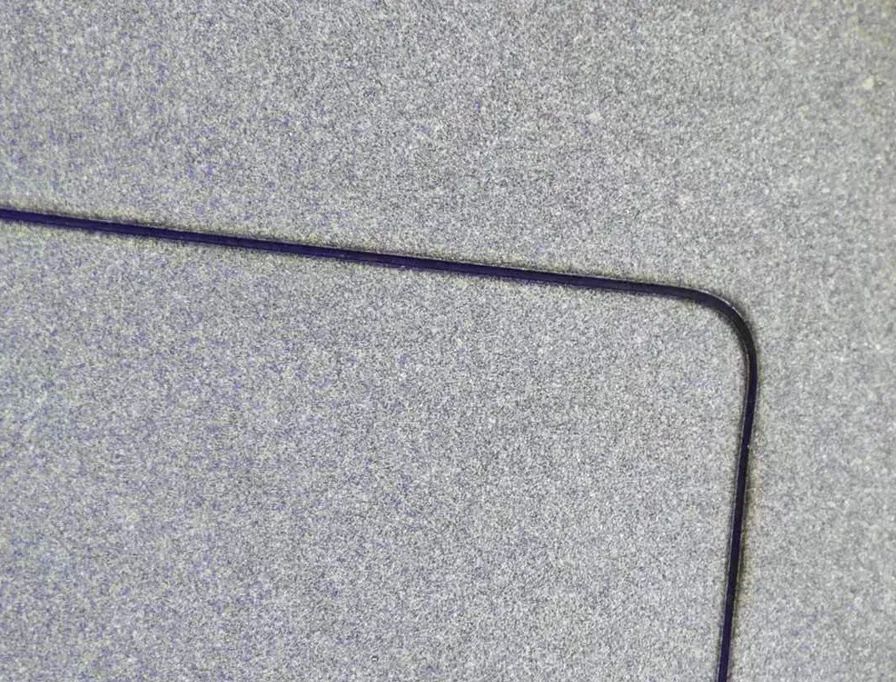
Start with the reason the edge matters
An edge requirement is more useful when its purpose is known. The customer may be concerned with fit, handling, the border around an opening or the appearance of an exposed area. Explain the relevant context without assuming that one visual description represents every functional requirement.
Identify whether the requirement applies to an outer profile, an internal opening, a narrow connection or a particular face. When different regions have different priorities, give them separate feature IDs. That lets a sample review connect each observation to the correct requirement.
Describe the observation before assigning a judgement
| Broad request | Information to add | Evidence to discuss |
|---|---|---|
| “Clean edge” | Which region and which visible condition are of concern? | Agreed observations and representative image references. |
| “No unwanted residue” | What region, face and condition should be checked? | Defined observation conditions and an acceptance reference. |
| “Good-looking window” | Which border or corners matter, and how are they viewed? | Identified window features and a repeatable comparison view. |
| “Must fit the assembly” | Which dimensions or relationships affect the fit? | Dimensional checks and any separate customer assembly verification. |
Terms such as a visible mark, loose material or a local irregularity can describe an observation. They do not automatically establish a cause, a severity level or an acceptance limit. Agree those conclusions against the project requirements.
Make image comparisons meaningful
State the sample ID, drawing revision and side being viewed. For image-based review, agree the observation method and relevant conditions, such as lighting, magnification or field of view, orientation and whether the material is supported or free. Include a suitable scale reference when a dimensional interpretation is intended.
Images taken under different conditions can lead to different impressions of the same feature. Retain the original image reference and avoid presenting an uncalibrated screenshot as a measurement. If a dimensional value is required, identify the measurement method separately.
Write an inspection note with a named region
The following record structure shows how to make an appearance discussion traceable. Bracketed entries must be replaced by the actual project information. It contains no test result or acceptance decision.
| Record field | Example entry to complete |
|---|---|
| Feature / region | [Window W1, named border, reference face] |
| Requirement | [Agreed condition or approved reference to compare against] |
| Observation conditions | [Method, lighting / magnification, support state] |
| Finding | [Description of the observed condition] |
| Evidence | [Sample ID, image ID, date and drawing revision] |
| Next action | [Accept within agreed scope / clarify / revise and review] |
Describe what is visible in the finding field. Keep any proposed cause or process change in a separate review note so the observation remains useful if the explanation changes.
Keep the inspection conclusion within its scope
A visual review can address the agreed appearance question. It does not, by itself, establish every electrical, mechanical or durability property of the part or completed assembly. Identify any additional verification needed for the intended use and who will carry it out.
Likewise, an equipment positioning specification is not an edge-appearance acceptance criterion. The project needs its own part requirements, checking conditions and evidence. If a feature cannot be judged reliably from the information available, record the open point and agree a better observation or sample review.
Bring the requirement into a sample evaluation
- Name the critical edge regions and their role in the part.
- Provide the drawing revision and material construction.
- Define the appearance reference or other acceptance basis.
- Agree observation conditions and required records.
- Separate appearance findings from dimensional and functional checks.
The edge and appearance guide connects these inputs to inspection planning. The sample evaluation checkpoints help define which questions a trial should address.
Prepare the appearance acceptance criteriaTurn this into a preparation note.
Record known details and mark open questions. Copy the note or link it to your enquiry before leaving; edits are not saved after a reload.
Define your inspection requirements.
Connect this topic to the available material, drawing and requirements for your part.
References and scope
Examples support project preparation. Agree acceptance criteria for your actual part.
Further project guidance: Define your inspection requirements. Material manufacture, coating, lamination, circuit fabrication and final assembly are outside the laser-processing service.