APPLICATION / FLEXIBLE HEATER ASSEMBLIES

PI film laser processing for flexible heater assemblies.

Custom laser-cut PI film profiles for customer-designed flexible heater assemblies. Define the mounting interface, film-layer role, connection openings and material construction for project review.

Our service covers laser processing of specified PI films and accepted existing film constructions for customer-designed heater assemblies.

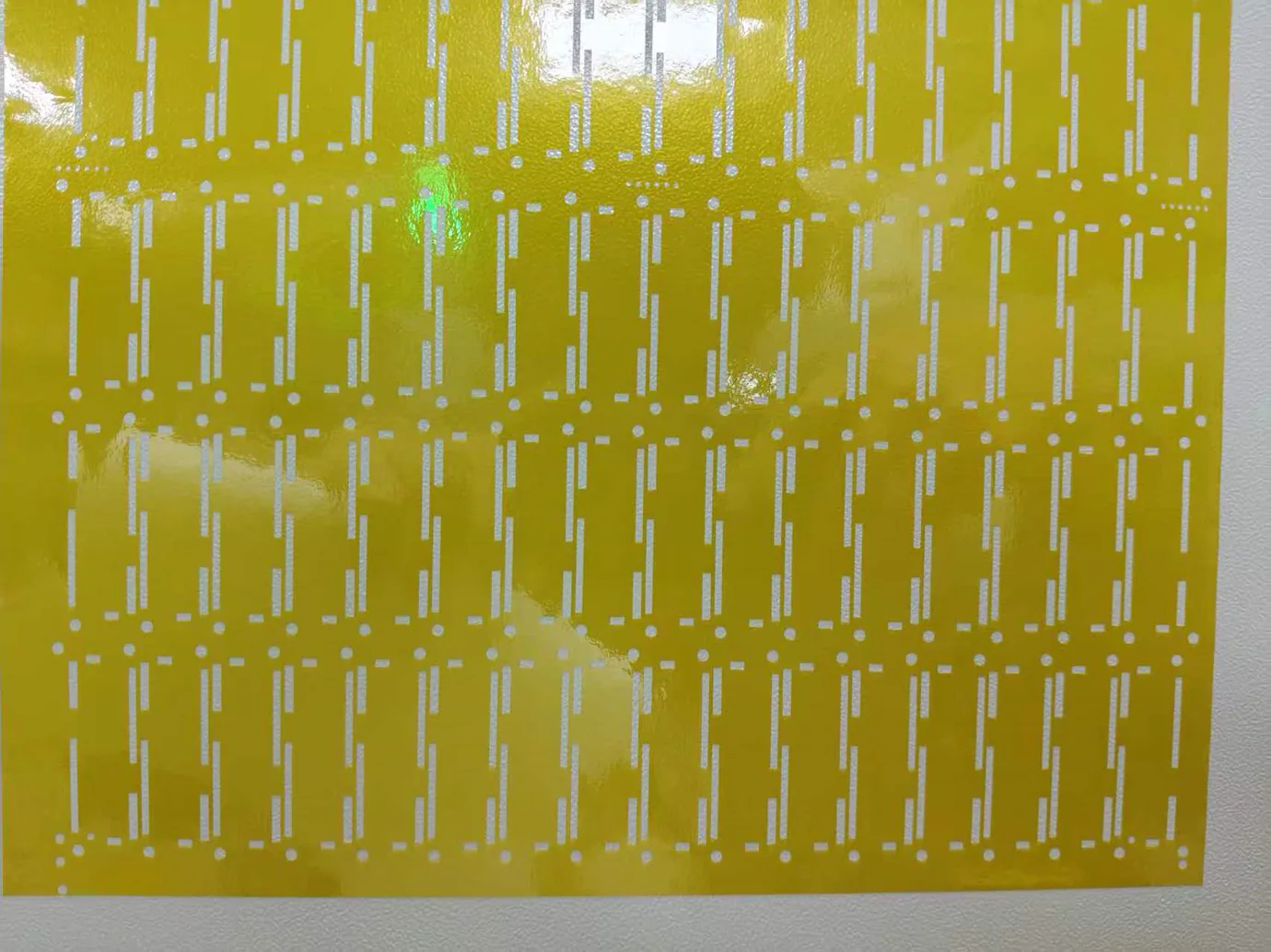
Rows of narrow, stepped profiles repeated across an amber film sheet.

01 / START WITH THE EQUIPMENT

Where will the heater assembly be installed?

For heater manufacturers, equipment integrators and development teams. These examples describe application contexts for review; they do not imply qualified products or past supply claims.

APPLICATION CONTEXT / 01

Equipment surface-heating assemblies

Instrument mounting plates, equipment contact faces and customer-designed heating platforms.

Relevant film parts
Specified base insulation, cover-film outlines, clearance holes and perimeter profiles.
Bring to review
Mounting-surface dimensions, contact regions, fastening positions and film orientation.
Discuss this application

APPLICATION CONTEXT / 02

Optical & instrument assemblies

Heater interfaces around lens mounts, instrument windows or detection equipment.

Relevant film parts
Annular or windowed film profiles, sensor access and connection clearances.
Bring to review
Regions that must remain open, window boundaries and sensor / locating references.
Discuss this application

APPLICATION CONTEXT / 03

Valve & tubing heater assemblies

Customer-designed installations on valve bodies, tubing or other curved surfaces.

Relevant film parts
Flat film profiles from a supplied developed drawing, with lead exits and location features.
Bring to review
Developed profile, installed arrangement, wrap direction and customer-defined seam relationship.
Discuss this application

APPLICATION CONTEXT / 04

Compact equipment & module assemblies

Limited-space interfaces within equipment enclosures, module housings and local mounting regions.

Relevant film parts
Irregular cover films, specified interface insulation and connection openings.
Bring to review
Adjacent components, space constraints, installation direction and lead-routing references.
Discuss this application

Identify the purpose of the film within the customer’s design. A window around an optical or sensing region does not establish optical transparency, temperature uniformity or another assembly-level property.

02 / INSTALLATION STUDY

Connect the film profile to the installation interface.

Select the interface that best describes the assembly. Use these concepts to explain coverage, access and drawing references; the actual geometry comes from your design.

Flat mounting surface with specified film coverageA rectangular film sits within a larger mounting-surface reference. An edge opening provides connection access and four holes indicate customer-defined location features. The drawing is an installation reference, not a complete heater. CONNECTION ACCESSSHARED LOCATION REFERENCECOVERAGEELEMENT REFERENCE ONLY

Film on a defined mounting face.

Installation reference
A customer-designated flat equipment surface and the components above or below the film.
Film coverage
The specified outer boundary and continuous film regions.
Open / protected regions
Lead exits, fasteners and other access areas, plus customer-defined protected zones.
Drawing inputs
Film drawing, mating surface, datums, installation face and connection references.
Discuss this installation interface
Windowed heater interface with an open functional regionA ring-shaped amber film surrounds a customer-defined opening on an instrument mounting face. An edge notch and locating references identify orientation. The window is not a claim of optical transparency or heater performance. CUSTOMER-DEFINED OPEN REGIONEXIT DIRECTIONLOCATING FEATURERETAINED FILM

Coverage around an open region.

Installation reference
A mounting face with a functional opening or an area that must remain accessible.
Film coverage
The retained film around the customer-defined window.
Open / protected regions
The open region, its purpose and any sensor or connection access.
Drawing inputs
Identify which film layer has the opening, its boundary, shared datums and the relevant assembly view.
Discuss this installation interface
Developed flat film and a separate curved installation referenceThe left drawing shows a flat film with an edge notch. An arrow connects it to a simplified customer curved mounting surface on the right. The drawing indicates correspondence only; no bending radius, overlap or forming service is specified. DEVELOPED FLAT PROFILEVIEWING FACE + EXIT DIRECTIONCUSTOMER INSTALLED ARRANGEMENT

A flat profile for a curved installation.

Installation reference
The customer’s intended curved surface and installed arrangement.
Film coverage
The specified developed outline and its installed relationship.
Open / protected regions
Lead exits, seam relationships and any defined non-bending or protected regions.
Drawing inputs
Developed flat drawing, installed reference, orientation and customer-defined bending conditions.
Discuss this installation interface

For curved installations, provide both the developed flat profile and the intended installed arrangement. Subsequent wrapping, forming and assembly are performed by the customer and are outside our laser-processing service.

03 / IDENTIFY THE PROCESSING SUBJECT

Identify the film layer within your heater assembly.

Name the layer and explain its relationship to the customer’s heater element and installation surface. The illustrated stack is one conceptual arrangement; actual constructions vary.

Illustrative film roles around a customer heater-element referenceSeparated cover and base films surround a gray element reference. An optional existing adhesive or liner is shown separately. Actual constructions vary; only the specified film processing is offered. COVER FILMCUSTOMER ELEMENTREFERENCE ONLYBASE FILMEXISTING ADHESIVE /LINER, IF PRESENT

Cover-film layer

A customer-specified covering profile. Identify continuous film coverage, approved openings and the interfaces that must remain accessible.

Base insulation layer

The specified base film and its relationship to the heater element and mounting face. Define the outline, orientation and shared location references.

Additional interface film

A separately specified PI film at another assembly interface. Provide its actual material, position and purpose rather than assuming it matches the cover or base film.

04 / DESCRIBE THE INTENDED USE

Define the operating conditions and assembly requirements.

Share the conditions established by your design team and identify unresolved items. A film’s material data and a complete heater’s operating performance require separate confirmation.

01

Temperature & exposure

Identify the thermal conditions relevant to the specified film and existing construction.

  • Normal operating exposure and duration.
  • Short exposures and temperature cycling, where applicable.
  • Later customer processing or assembly temperatures.
02

Mounting & mechanical conditions

Connect the film to the surface, orientation and retention arrangement.

  • Mounting surface and customer’s attachment method.
  • Film face, bend direction and defined bending conditions.
  • Static or repeated movement, clamping and lead-region requirements.
03

Electrical & functional requirements

Provide the role assigned to the film and the customer’s applicable criteria.

  • Specified insulation role and existing electrical requirements.
  • Heater-element references and protected regions.
  • Test configuration, acceptance criteria and validation responsibility.

Film data and heater performance.

The actual film grade, adhesive, conductor construction, attachment and operating conditions belong in the customer’s assembly specification. A laser-cut film profile does not establish heater power density, operating-temperature limits or temperature uniformity.

Assembly conditions belong in the review.

Describe the installation surface and the intended environment. The customer or designated validation team confirms heating performance, electrical behavior and suitability of the assembled product under those conditions.

05 / INCOMING MATERIAL STATE

What arrives for laser processing?

Our main offering is clearly defined film processing before heater assembly. Tell us whether the supplied material is independent film or already contains bonded layers, conductors or completed components.

01

Unassembled PI film

Provide the manufacturer, full grade, thickness and flat layer drawing. Identify the target film and retained regions.

FILM REVIEW

Discuss this incoming condition
02

Adhesive-backed film without conductors

Describe the existing adhesive, liner and layer thicknesses. State the adhesive face and the layers to cut or retain.

CONSTRUCTION REVIEW

Discuss this incoming condition
03

Conductors or bonded layers present

Provide the complete construction, conductor locations, protected regions and exact requested operation. Acceptance requires separate evaluation.

SEPARATE TECHNICAL REVIEW

Discuss this incoming condition
04

Finished heater assembly

Identify the product, manufacturer restrictions and proposed processing area. Trimming or adding holes to a finished heater is not a standard service.

SCOPE TO CONFIRM

Discuss this incoming condition

A request for review does not confirm acceptance of conductor-containing material or a finished heater. If the construction is not yet confirmed, share available supplier references or labels and mark the unknown details.

06 / MOVE FROM APPLICATION TO PART

Take the installation requirement to a defined film drawing.

Choose the relevant part page for geometry and preparation details, then use the cutting-service page to review the processing scope.

Frames & custom profiles

For independently specified perimeter, annular or irregular film parts within an installation interface.

Explore frames & profiles

Identify the actual layer function. Similar-looking profiles can have different materials, assembly roles and acceptance requirements.

07 / A USEFUL FIRST BRIEF

Prepare a clear heater-film project brief.

An installation sketch can begin the discussion. An agreed film drawing, actual construction and acceptance scope are needed before processing.

On small screens, scroll sideways to read all three columns.

InformationWhat to includePurpose
Equipment applicationEquipment type, installation location and the intended role of the film.Explains the application context.
Installation referenceFlat or curved interface, adjacent components, orientation and relevant section views.Connects the film to the assembly.
Film-layer drawingOutline, windows, lead exits, location holes, units and controlling dimensions / datums.Defines the geometry to process.
Material constructionManufacturer, full grade, thickness and existing adhesive, liner or other layers.Identifies the actual incoming material.
Processing scopeTarget cut and retained layers, conductor references and protected regions.Defines the laser-processing boundary.
Operating & assembly conditionsTemperature and duration, bending, attachment and customer electrical requirements.Supports material and application review.
Revisions & quantityEach layer’s part ID, revision and quantity; individual pieces, panels or set breakdown.Keeps layers and versions identifiable.
Acceptance & deliveryCritical dimensions, edge / appearance criteria, cleanliness, packaging and document requests.Agrees the checking and handover scope.

For a set containing different upper and lower films, identify each part number, revision and quantity per set. Packaging, retained carriers and inspection documents are requests for agreement, not assumed standard capabilities.

08 / PART CHECKS + ASSEMBLY VALIDATION

Review the film part.
Validate the heater assembly.

Agree which checks apply to the film and who confirms the completed heater’s function. Keep sample results tied to the identified drawing and material construction.

  1. 01

    Define the film layers

    Confirm the drawing, material, processing scope and acceptance requirements for each identified film layer.

  2. 02

    Evaluate processed samples

    Check profiles, opening positions, retained regions, edge condition and handling against the agreed criteria.

  3. 03

    Validate the assembled heater

    The customer or designated team evaluates assembly fit, insulation, electrical operation and thermal performance.

  4. 04

    Confirm repeat orders

    Confirm part IDs, revisions, material construction, quantities and acceptance conditions before repeating the job.

09 / BEFORE YOUR ENQUIRY

Flexible-heater applications, clearly defined.

Answers about the film-processing scope, installation references and the customer’s assembly validation.

Do you manufacture complete flexible heaters?

Our service is the agreed laser processing of specified PI films and accepted existing constructions. Heater circuit manufacture, adhesive application, coating, lamination, wiring, temperature-control systems and complete heater manufacture are outside this service.

Which PI film layers can be reviewed?

Cover-film profiles, base insulation films and separately specified interface films can be submitted with their material and drawing information. Explain each layer’s function and incoming condition. See heater film layers for the geometry families.

Can I start with an assembly drawing?

Yes. An assembly drawing or sketch can explain the installation interface, film location and protected regions. Before processing, the film-layer drawing, material construction, operation and acceptance criteria still need to be confirmed.

Can you process film for curved heater assemblies?

Provide the customer-approved developed flat profile and an installed reference, with orientation, seam relationship and relevant bending conditions. We review the specified flat film for laser processing. Wrapping, forming and heater assembly are outside our service.

Can you process existing adhesive-backed film?

Submit the existing PI, adhesive, liner and any other layer details. Identify each thickness, the adhesive face and layers to cut or retain. Feasibility, including liner retention, must be reviewed for that construction; adhesive coating and lamination are not supplied.

What if the material already contains conductors?

Identify this before processing is proposed. Provide the complete construction, conductor locations, protected areas and exact requested operation. This requires a separate technical evaluation and does not imply that conductor machining or completed-heater modification is accepted.

Can a finished heater be trimmed or given extra holes?

This is not a standard service. The product construction, heater manufacturer’s restrictions and customer design must be reviewed before any processing proposal. Do not assume that a finished heater can be cut simply because its insulation includes PI film.

Who confirms heater temperature and electrical performance?

The customer or designated validation team confirms the assembled heater’s electrical, thermal and installation performance. Agreed film geometry and appearance checks do not establish heater power, temperature uniformity or an operating rating. See sample evaluation for the review route.
PI FILM LASER PROCESSING

Explore the website

Find the information for your PI film project.