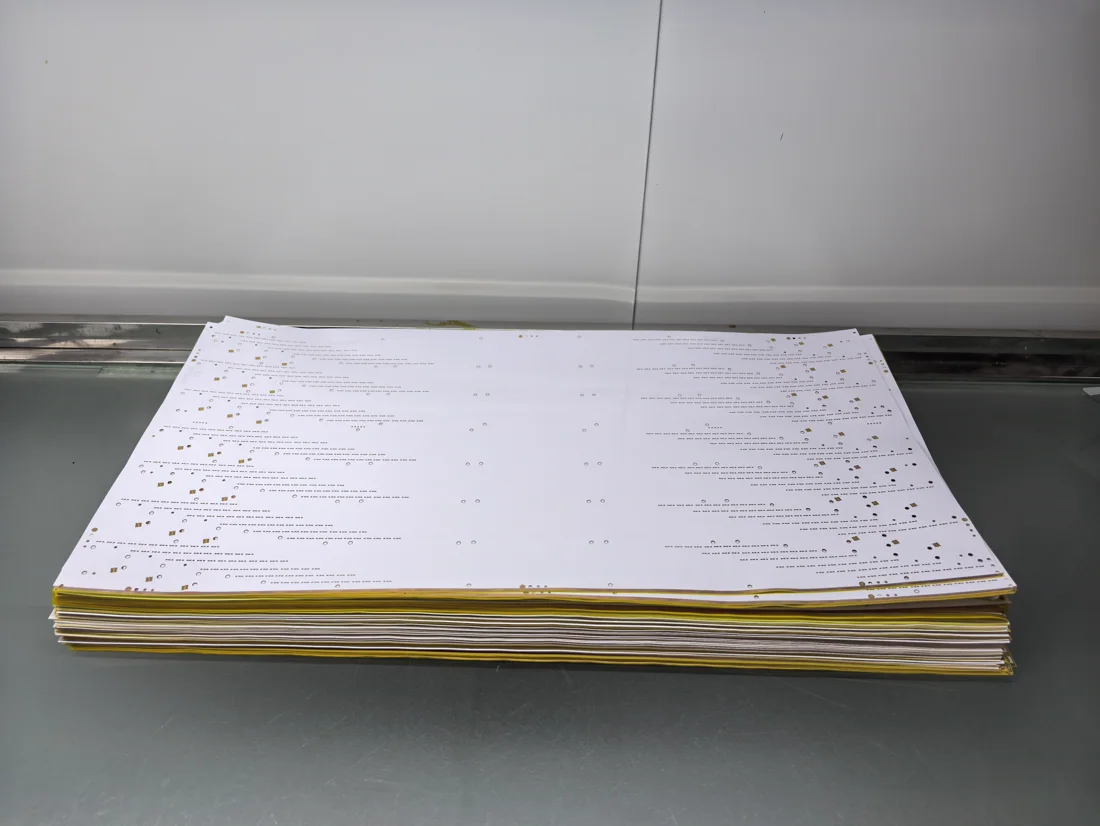
Bare PI film
Identify: manufacturer or grade, nominal thickness, sheet dimensions and any surface treatment.
Review: the smallest features, edge expectations, dimensional checks and how thin parts will be handled.
PI FILM PROCESSING SERVICES
Turn your PI film drawing into a defined processing brief. Choose the operation, identify the material layers and agree what the finished part needs to meet.
01 / CHOOSE YOUR PROCESS
A profile defines the shape of a film part. A coverlay window exposes a specified area of a flexible circuit. Some drawings contain both; the full material stack still needs review.
| Your requirement | ROUTE 01PI film laser cutting | ROUTE 02Coverlay laser openings |
|---|---|---|
| Main purpose | Produce a specified outline or internal geometry in PI film. | Create access windows and locating features in an FPC coverlay layer. |
| Typical geometries | Frames, spacers, washers, masks, slots and shaped film layers. | Pad-access windows, connector openings, alignment holes and coverlay profiles. |
| Drawing priorities | Finished outline, internal features, datums, critical dimensions and quantities. | Window size and location, registration references and the layers to cut or retain. |
| Material information | PI grade, thickness, adhesive or backing if present, and supply format. | PI, adhesive and release-liner details, with each layer identified separately. |
| Acceptance focus | Dimensions, feature positions, edge condition, flatness and handling. | Opening geometry, registration, edge condition and any agreed layer-retention requirements. |
| Explore the scope | Review film cutting | Review coverlay openings |
Swipe the table horizontally to compare both services.
Select the main feature in your drawing. This is a route to a technical discussion; final suitability depends on the material and requirements.
Start with PI film laser cutting. Include your outside profile, internal features and material thickness.
See the film-cutting scope →SERVICE DETAIL / FILM GEOMETRY
Custom film shapes for insulation, masking, spacing and other assembly requirements, evaluated against your drawing.
SERVICE DETAIL / ACCESS & REGISTRATION
Defined windows and locating features in coverlay film. Review the opening pattern together with its alignment and layer requirements.
02 / MATERIAL REVIEW
“PI film” describes only part of the specification. Adhesive, coatings and backing layers can change what needs to be evaluated. Identify every layer before agreeing a processing route.
How to describe your layer stackIdentify: manufacturer or grade, nominal thickness, sheet dimensions and any surface treatment.
Review: the smallest features, edge expectations, dimensional checks and how thin parts will be handled.
Identify: the PI layer, adhesive type and thickness, release liner and the intended cutting sequence.
Review: which layers are opened, whether a liner remains, and how adhesive or residue affects acceptance.
Identify: each coating, metal or polymer layer, its thickness and its role in the finished part.
Review: compatibility and sample requirements before accepting the stack. Suitability is not assumed from the PI layer alone.
Supply format matters. Tell us whether material is supplied as sheets, rolls or pre-cut pieces, and who will provide it. Handling and usable dimensions must be confirmed for the project.
03 / DEFINE A GOOD PART
A clear drawing makes the discussion specific. Identify the features that affect fit or function, then agree how those features and the finished film will be checked.
Mark overall dimensions, critical tolerances and the references used to measure them. Nominal size alone does not define acceptance.
Define hole or window locations relative to agreed datums. Highlight the features that must align with another layer or component.
Discuss acceptable edge appearance, residue, discoloration and distortion. Use reference images or samples when visual limits matter.
Agree how to protect and identify thin parts, which checks are required and what results or sample records should accompany them.
04 / BUILD YOUR QUOTATION BRIEF
Two parts with the same outside size may involve different work. These six inputs help define the scope, evaluation needs and delivery requirements.
01 / GEOMETRY
Outline complexity, opening count, feature size and spacing establish what has to be processed and reviewed.
02 / MATERIAL
Grade, thickness, adhesive, liner and usable material size define the sample and handling discussion.
03 / QUANTITY
Separate the evaluation quantity from the expected order quantity. Note whether repeat batches are planned.
04 / VERIFICATION
Critical dimensions, visual criteria and requested records clarify the level of checking required.
05 / HANDLING
Carrier retention, separate pieces, orientation, protection and packaging need to be specified together.
06 / PROJECT TIMING
Include your target sample date, required delivery date and destination in the project notes for review.
Price, minimum quantity, feasibility and lead time are confirmed after reviewing the actual drawing and material. No universal values are assumed.
Prepare your project enquiry05 / FROM BRIEF TO APPROVAL
Use the drawing and sample review to settle open questions before agreeing production. The depth of evaluation depends on the material, geometry and application.
Share the drawing, stack, quantities and acceptance priorities. Identify missing information early.
Agree: the revision and processing scope.Assess the requested features and material. Clarify any assumptions and the need for evaluation pieces.
Agree: open questions and an evaluation plan.Where required, review sample dimensions, edges and handling against the agreed criteria.
Agree: results, changes and acceptance.Confirm the approved revision, quantity, inspection scope, packaging and delivery arrangement.
Agree: the order and production requirements.Our scope is laser processing. Film manufacture, coating, lamination, etching, plating and finished circuit or assembly production are outside this service.
06 / PREPARE THE DETAILS
These short guides help turn your part idea into information that can be reviewed. Each opens the relevant guide on our homepage.
Critical dimensions, datums, revision and the features that matter to your assembly.
Read the drawing guide MATERIAL GUIDEPI, adhesive and backing information, with a clear statement of what is cut or retained.
Read the layer-stack guide ENQUIRY CHECKLISTQuantities, files, inspection priorities and delivery requirements for the review.
Read the enquiry checklist07 / SERVICE QUESTIONS
Answers to the questions that help define a laser-processing request.
Discuss your requirementsYes, include both in the request and clearly identify the features and layers involved. The processing sequence and suitability must be reviewed for the actual stack. Using one drawing does not imply that all features can be completed in one operation.
Yes, where present. Provide the layer order, material types and individual thicknesses. State which layers should be cut and whether any liner must remain intact. Selective layer retention requires technical evaluation before it can be confirmed.
Identify the dimensions and locations that affect fit or function. Share assembly references or a sample if available. Tolerances and how they will be measured need to be agreed before the part can be accepted for production; nominal dimensions are not sufficient.
Sampling may be needed when the material stack, feature size, edge requirements or layer-retention request is not yet established. A review should define what the sample is intended to prove and how the result will be assessed. The need, cost and timing of sampling are confirmed for the project.
Send the revised drawing with a new revision identifier and explain what changed. Geometry, material, quantity or inspection changes may require the processing scope, price and schedule to be reviewed again.
This service covers laser processing of specified film geometries and openings. It does not include circuit design, coating, lamination, etching, plating or assembly of a finished circuit, sensor or heater.